
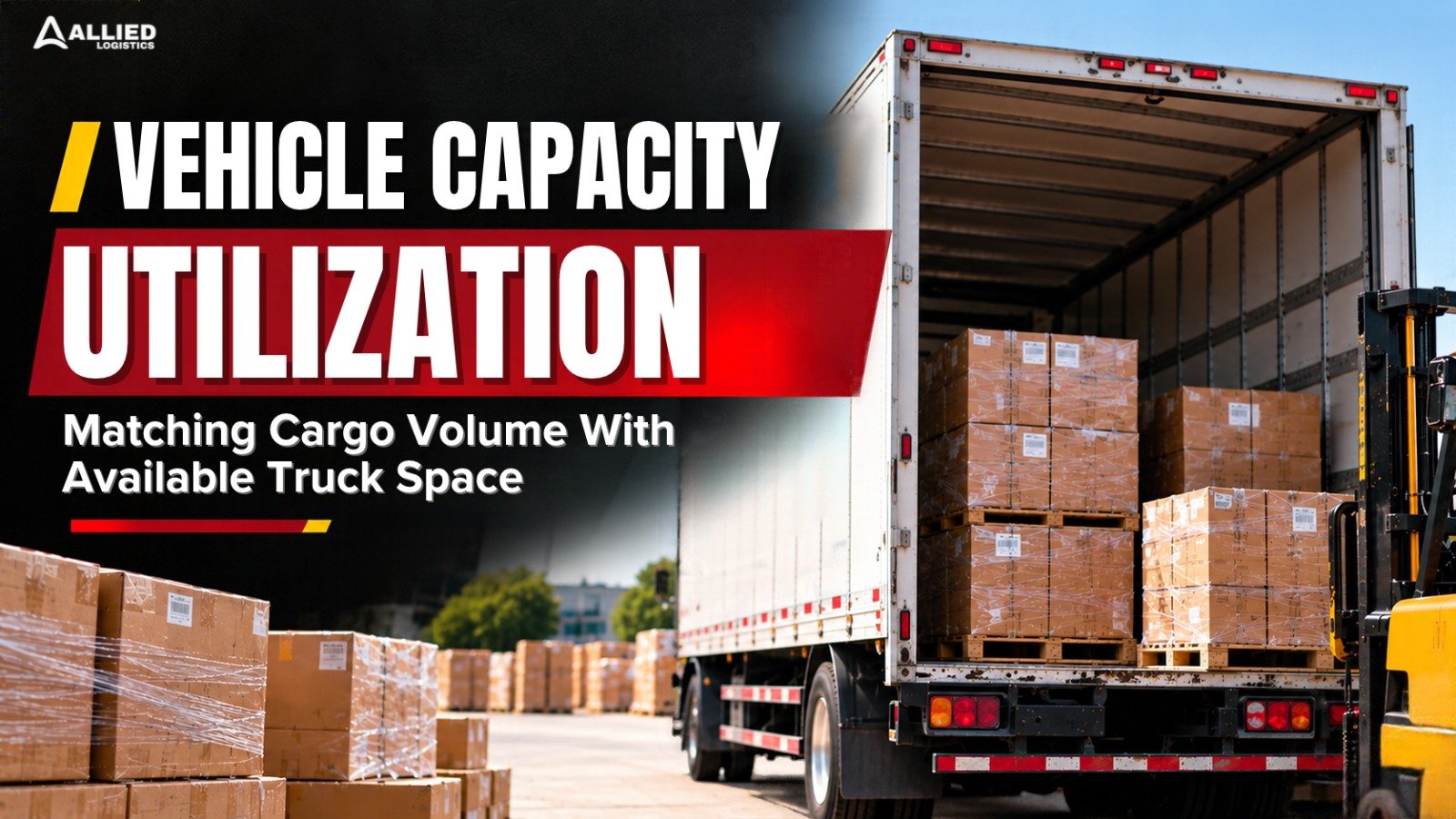
Vehicle capacity utilization is a part of efficient transportation and logistics operations. It means making sure the cargo that needs to be moved fits well with the space and weight limits of the truck. Good planning helps companies use their trucks properly while keeping the goods safe during delivery.
For logistics companies like Allied Transport & Logistics (ATL) managing truck capacity is a part of coordinating transportation, dispatch and delivery.
What Is Vehicle Capacity Utilization?
Vehicle capacity utilization is about how a truck’s available space and weight capacity are used to carry goods. It is not about cramming as much as possible into the truck. The goal is to carry the needed cargo without going over the truck’s limits.
For example, a truck might have room for many large cartons but reach its maximum weight limit before the space is full. In another case, light items might take up all the space. Still be far below the weight limit. Understanding both volume and weight helps logistics teams pick the truck for each shipment.
Why Matching Cargo Volume With Truck Space Matters
Choosing the truck for a shipment can make a big difference in daily operations. Use of available space: Good cargo planning helps reduce wasted space in the truck.
Transport efficiency: Using the correct vehicle avoids extra trips caused by bad planning. Safer cargo handling: Staying within weight limits and loading cargo properly supports transport. Delivery planning: Knowing capacity helps teams organize shipments based on needs.Reduced transport waste: Using trucks when possible saves money and resources.
Factors to Consider When Planning Truck Capacity
Cargo Weight and Volume
Both the weight and size of the goods must be checked before choosing a truck. Heavy items can hit the weight limit fast. Bulky items can fill the space without being heavy.
Cargo Shape and Packaging
The shape and packaging of goods affect how they fit in the truck. Shaped cartons are easier to load than odd-shaped items. Packaging should protect the goods. Make loading and unloading safe.
Vehicle Specifications
Each truck has limits for payload, space, and size. Teams must check these before assigning a vehicle. Cargo must stay within weight and space limits.
Delivery Requirements
The number of stops, unloading order, and handling needs affect how cargo is arranged. Goods needed first should be placed where they can be reached without moving items.
How to Improve Vehicle Capacity Utilization
Companies can improve truck utilization by following a process for loading and dispatch. First, record the weight, size, and number of each shipment. Next, compare these details to the truck’s space and weight limits. Pick a truck that fits, not based on size but on actual needs. Then arrange the cargo so weight is balanced and goods are secure. Teams should also think about unloading order, access, and stacking rules.
Finally, look at trips to find patterns. Are there issues like space, wrong truck choices or shipments that could have been combined? This helps make choices for future trips.
Frequently Asked Questions
1. What is vehicle capacity utilization in logistics?
It is how well a truck’s space and weight capacity are used to move cargo efficiently.
2. Why is cargo volume important when selecting a truck?
Volume shows how much space goods need. It helps teams pick a truck that fits the shipment without wasted space or extra trips.
3. Is filling a truck always the option?
No. A truck should not go over weight, space, or legal limits. Cargo must be loaded safely. Arranged well for unloading.
4. How do weight and volume affect truck capacity?
Weight decides how much can legally be carried. Volume shows how much space is needed. One limit can be hit before the other depending on the cargo.
5. How can logistics companies improve truck utilization?
They can measure cargo accurately, pick the truck, plan loading order, combine compatible shipments when possible, and review past trips to find improvements.
Conclusion
Vehicle capacity utilization helps logistics companies match cargo needs with the right truck size and carrying ability. By looking at weight, volume, packaging, truck specs, and delivery needs, businesses can plan better. Careful planning leads to better loading, better use of space, and smoother dispatch. For companies with shipments, a clear approach to truck utilization improves reliability and service.